

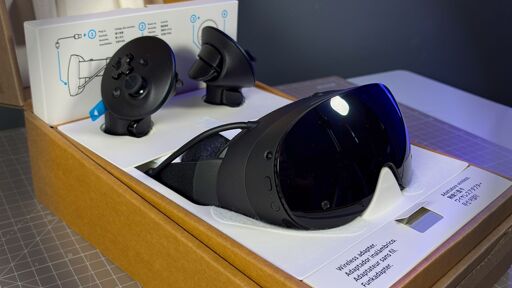
t’s certainly been a journey for Valve. A week prior to the Steam Frame’s launch, we spoke with two engineers at Valve about the project: Joy Lyons, hardware engineer, and Jeremy Selan, software engineer. The memory crisis and the price were a big part of that conversation. From that chat, we can confirm that Valve had aimed for a lower price point than the one it’s launching the Frame for today.
Here’s Lyons on the memory crisis:
“We set out to design this hardware with one particular price in mind, but we’ve made choices to make sure that we’re making a product that is choiceful, that people can purchase, they can upgrade with different features later. But we wanted to make sure we had a base product with really great performance. Then that price target shifted due to the ongoing RAM crisis around the world.”
Lyons also said that forecasting for the cost of certain components used in the Steam Frame is an ongoing challenge.
Not exactly boding well of the Steam Deck 2.
What I don’t understand is why didn’t they release a “Steam Frame Lite” that is just the VR headset without the onboard computer. It would be cheaper, lighter, and still fit most users.
From the dev interviews, Valve people said they originally wanted it to be just a wireless PCVR headset with no standalone. But after giving it a powerful enough chip to handle the tracking, the foveated streaming with low latency, and be responsive enough, they were left with enough power budget to run things locally.
So I guess that answers your question. It just wouldn’t be much cheaper anyway.
I presume it’s the onboard computer that does the camera processing for tracking, and managing the wireless stream when streaming. They’d need to get a supply of cheaper chips that can still keep up with the processing, alongside less RAM and minimal storage, and develop a cut down system image that cannot run games and only does tracking and streaming. Unless you want a wired steam frame, I guess.
Which is all feasible, but it would take work, and then you’d get to manufacturing another variant, maintaining another version of firmware/software, how many people would go for it. And I have the impression Valve is already having trouble procuring enough hardware as is.
You need the whole setup for streaming. You could maybe save ram ny using 8 gigs instead of 16 but at that point its just better to have one sku. From ltts review it seems like the hardware is used pretty heavily even when streaming the games.
Making it do only tracking and streaming would still require at least some notable fraction of the current processing power, and most importantly they need all the bandwidth for even supporting high quality passthrough (especially with the color camera attached). They could’ve reduced RAM, gotten a CPU at maybe half or third of the performance, but that would still leave it more expensive than the Quest. Would that even be an interesting product?
Because it will take a year and a billion dollars to design, will still cost more than Quest since they won’t subsidize it and nobody will buy it?
If it’s a Valve product, it’s going to be sold out
That’s specifically because they mostly make good products they themselves are proud of. What OP proposes is not that.
Yeah seriously. People can complain all day, myself included. But I’m still gonna buy it.
Why? I’ve been holding out, I don’t have any VR system, is this is the most well rounded without selling my soil to Meta
Fuck Meta, keep the fertile stuff for yourself
Yes, but putting everything aside, why not? /s