

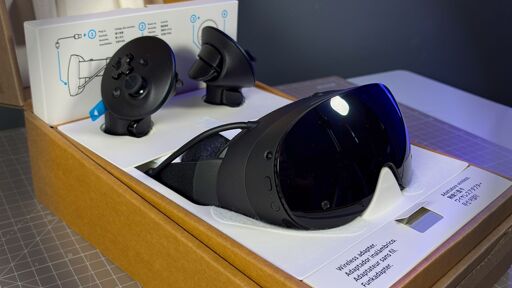
t’s certainly been a journey for Valve. A week prior to the Steam Frame’s launch, we spoke with two engineers at Valve about the project: Joy Lyons, hardware engineer, and Jeremy Selan, software engineer. The memory crisis and the price were a big part of that conversation. From that chat, we can confirm that Valve had aimed for a lower price point than the one it’s launching the Frame for today.
Here’s Lyons on the memory crisis:
“We set out to design this hardware with one particular price in mind, but we’ve made choices to make sure that we’re making a product that is choiceful, that people can purchase, they can upgrade with different features later. But we wanted to make sure we had a base product with really great performance. Then that price target shifted due to the ongoing RAM crisis around the world.”
Lyons also said that forecasting for the cost of certain components used in the Steam Frame is an ongoing challenge.
Not exactly boding well of the Steam Deck 2.
the goalposts were that x86 is more open source friendly than ARM. Intel and AND work on mainline Linux because they actually submit their patches to mainline and make sure that they get accepted. Sure, there’s firmware, but the code to use that firmware is open source and widely used. The worst you see is maybe SoC drivers for webcams.
Compare that to ARM, where the majority of vendors dont provide source code for their kernels, and when they do boot with mainline Linux, half the shit is broken because of device trees or undocumented peripherals.
I wouldn’t want to buy an ARM computer.